
Presidential Strategic Initiative on Public Impact Research
Presidential Strategic Initiative on Public Impact Research
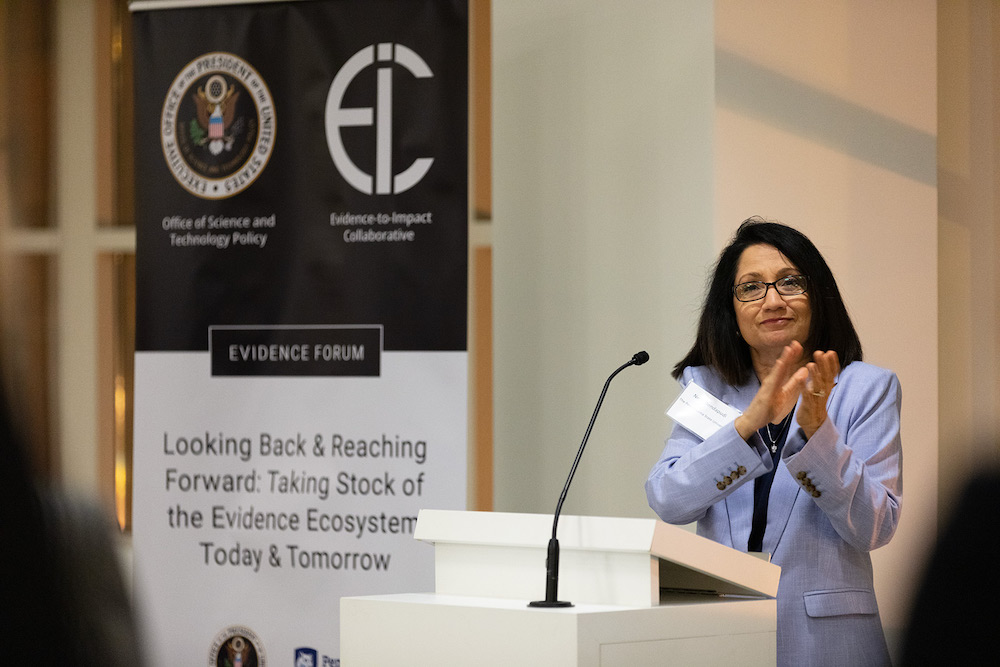
Informational Webinar on the Presidential Public Impact Research Awards (PPIRA)
About
The broader field of academia is coalescing around a movement – a movement that centers progress not just on scientific progress, but on pro-social community improvement. This strand of activity strengthens university-community engagement and directly benefits the communities involved. Often referred to as “Public Impact Research”, Penn State utilizes the definition offered by the Association of Public and Land-Grant Universities (APLU) Public Impact Research working group.
Penn State University’s Presidential Strategic Initiative on Public Impact Research (PSIPIR) aims to leverage academic inquiry for addressing societal challenges and support the broader movement.
The Initiative stands as a critical response to the growing skepticism about the value of higher education. In a time when institutions of higher learning face questions about their relevance and impact on society, Public Impact Research underscores the essential role universities can play in addressing societal challenges. By prioritizing research that yields direct public benefits, this initiative not only showcases the tangible contributions of academic inquiry, but also strengthens the societal trust in these institutions. Through inclusive strategic partnerships, the initiative aims to foster a culture of research that is deeply connected to community needs and societal well-being, thereby reaffirming the vital role of higher education in advancing public good.
This initiative emerges from strategic work with the White House Office of Science & Technology Policy and Office of Management & Budget, the Pew Charitable Trusts Evidence Project, and members of the research funding community. These partnerships are designed to support research initiatives that tackle societal challenges, utilizing collective expertise to maximize the impact of research on public welfare.
Objectives:
- Encouraging Collaborative Research: Support transdisciplinary efforts to solve societal issues, with a focus on community benefits that have broader impacts.
- Enhancing Engagement: Build bridges between academia, industry, and communities, ensuring research meets societal needs.
- Integrating Research and Education: Embed PIR principles in curricular opportunities to include students in research and grow their ability to recognize empirical fact in their personal and professional lives.
- Promoting Inclusivity: Facilitate research initiatives reflecting the needs of all communities as we seek to build a more just world.
Strategic Activities:
- Support for Impact Teams: Encourage and support the development of research teams focused on societal needs across the campuses.
- National Leadership in Higher Education: Unite university leaders and key partners to champion public impact research and map the future of institutions of higher learning.
- Workforce Development: Partner with federal agencies to enhance the pipeline of skilled professionals in evidence-based research.
- Scientific Inquiry Evolution: Engage scholars in rethinking the role of research in society and exploring the science of impact.
These objectives and activities aim to transform the approach to research, making it more inclusive, collaborative, and impactful. By doing so, Penn State aspires to lead by example in creating positive societal change through academic research.
This approach maintains the original intent of showcasing the initiative’s goals and activities while emphasizing a community-focused, inclusive tone that invites collaboration and participation from a broad spectrum of stakeholders
In particular, many of Penn State’s Commonwealth Campuses serve students who identify as First-Generation students, immigration system-experienced, part of underrepresented racial and/or ethnic groups and/or among other complex and intersectional identities. A relatively high proportion of students commute to campus and they remain deeply integrated into their communities, and many students attend part-time to continue to work outside jobs. We want to elevate these deep community connections and invest in the research partnerships that benefit our communities.
Request for Proposals: Presidential Public Impact Research Awards
The Presidential Public Impact Research Awards (PPIRA) program recognizes and encourages researchers and their students across our Commonwealth Campuses who are conducting research benefitting their communities alongside community partners—often referred to as “Public Impact Research”, utilizing the definition offered by the Association of Public and Land-Grant Universities (APLU) Public Impact Research working group.1 The goal of the PPIR Award is to promote the growth of faculty and student “Impact Teams” engaged in Public Impact Research across the Commonwealth.
Background
The PPIR Awards seeks to build on commonwealth research to strengthen university-community engagement and enhance capacity that directly benefits the Commonwealth. These awards recognize the meaningful contributions of our Commonwealth Campuses to their communities and seeks to elevate the faculty and students doing this important work.
Criteria & Submission Process
Successful submissions will develop or build upon a project seeking to serve critical community needs—specifically co-envisioned and co-created with community partners. These projects will seek to impart positive impacts, defined broadly, on the communities in which it operates. The projects will also serve as exploratory research to help Penn State engage a wide range of funders—from foundations to federal and state funding agencies—in interdisciplinary research grants. Student experiential learning is key to this Award opportunity, and each project should incorporate student engagement in the research process.
Up to 15 awards will be awarded per year. Applicants should consist of 2-4 faculty working as a team. The project must be completed within 1 calendar year after the award. The award will provide up to $10,000 for each faculty team member—in the form of summer support—with the aim of increasing the available effort to expend on research activities (e.g., proposal development with community partners). An additional $3,500 is designated per student participating on impact teams to directly support the student.
Teams will be expected to submit a brief proposal focusing on research related to critical community issues with substantial promise for public impact that improves well-being of community residents. Particular consideration will be afforded to proposals that emphasize interdisciplinary approaches. Proposals are required to include:
- Proposed research methodology and data collection plan. (1,000-word limit)
- How the student researcher will be integrated into the project. (500-word limit)
- A project timeline inclusive of opportunities for external grant proposal development. (500-word limit)
- How faculty and student time will be used (500-word limit)
- Potential targets for seeking additional funding to extend the scope of the project (Please list)
- A Letter of Support (LOS) or a “sponsorship’ letter from a community group or partner (broadly defined) that clearly indicates a desire to enter into a research collaboration for the benefit of the community that it serves.
Awardees will be expected to participate in a facilitated learning community composed of other PPIR Awardees from across the Commonwealth. This learning community will be provided supports intended to promote interdisciplinary partners and research proposal development.
Awardees will also be required to participate in activities evaluating the PPIR Award’s effectiveness. All efforts to minimize burden on Awardees will be made. A component of this evaluation will be directed at understanding the implications of increased public impact research productivity for faculty development as well as career trajectories for student participants. The evaluation will employ a wait-list design to ensure the best supports possible for winning teams.
Applications are now being accepted and are due no later than April 12 at 5 P.M. EST to Evidence2Impact@psu.edu. Proposal review will begin April 1 on a rolling basis. For questions, please contact Evidence2Impact@psu.edu. The PIPR Awards are part of the Penn State Presidential Strategic Initiative on Public Impact Research.
1 For more information, please visit: https://www.aplu.org/our-work/2-fostering-research-innovation/public-impact-research/
Presidential Strategic Initiative on Public Impact Research
Share This Page
LET’S STAY IN TOUCH
Join the Evidence-to-Impact Mailing List
Keep up to date with the latest resources, events, and news from the EIC.